HISTORY
Showa52
Yasuo Kitaoka commissioned ETS (Educational Testing Service) in the United States to develop the TOEIC Test.
Founder of the TOEIC Test
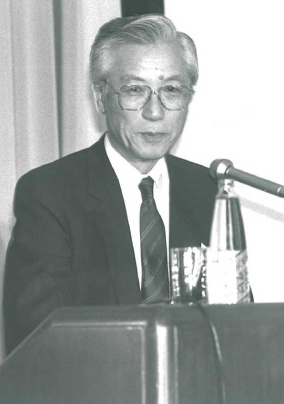
The TOEIC Test was born from the strong conviction of a certain person. That person was Yasuo Kitaoka. Kitaoka joined Time Inc. in 1951. and began to work internationally in the 1970s, utilizing his language skills. As an advisor to the Japan-U.S. Business Conference, he was at the negotiating table and keenly felt the need for an objective "yardstick" to measure English communication ability. This awareness of the problem became the starting point for the development of the "TOEIC Test." In 1974, he left Time Inc. and established International Communications Inc. (ICI).
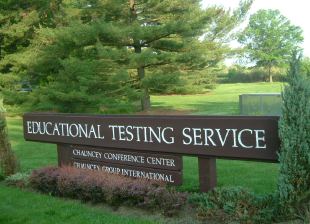
In developing the TOEIC Test, Kitaoka frequently visited ETS (Educational Testing Service), an American test development organization, from 1977 to the following year, and held numerous negotiations. Protase Woodford, the ETS representative at the time, was moved by Kitaoka's extraordinary enthusiasm and perseverance, and showed strong interest in his innovative concept of a "globally standardized test," offering his cooperation. This eventually led to the birth of the TOEIC Test.
Two People Who Supported Kitaoka
●Yaeji Watanabe
It was Yaeji Watanabe who worked alongside Yasuo Kitaoka to realize the implementation of the TOEIC Test. Watanabe retired from the Ministry of International Trade and Industry (now the Ministry of Economy, Trade and Industry) at the young age of 49 and established the "Japan-China Economic Association" with the aim of supporting economic and cultural exchange between Japan and China. Having worked at the government ministry responsible for promoting Japanese trade, Watanabe later met Kitaoka, and they bonded over their shared desire to improve the English proficiency of Japanese business people. From then on, Watanabe worked tirelessly toward the implementation of the TOEIC Test in Japan and the establishment of a foundation to support it.
●Yukio Saegusa
Another key person was Yukio Saegusa, who worked with Kitaoka at Time Inc. Saegusa had diverse experience, having worked as a high school teacher, in the editorial department of a publishing company, and also taught Japanese at Stanford University. He later served as an editor-in-chief at International Communications, Inc. and a professor at Waseda University. It was Saegusa who advised Kitaoka to commission ETS for the development of the TOEIC Test. After the test's launch, he dedicated himself to analyzing test-taker data, playing a crucial role in supporting the reliability and advancement of the TOEIC Test.
Showa54
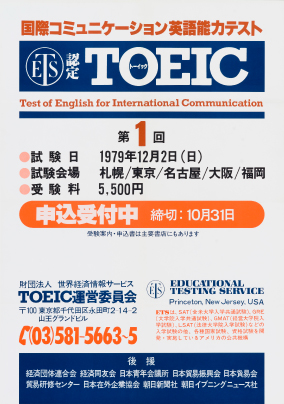
The first TOEIC Test Secure Program was held in Sapporo, Tokyo, Nagoya, Osaka, and Fukuoka, with 2,773 test takers.
The TOEIC Steering Committee was established within the World Economic Information Service (WEIS) Foundation.
In 1979, the TOEIC Steering Committee was established within the World Economic Information Service (WEIS) Foundation, which is under the jurisdiction of the Ministry of International Trade and Industry (now the Ministry of Economy, Trade and Industry).
At this time, Yasuo Kitaoka assumed the position of Chairman of the TOEIC Steering Committee.
In September 1979, registration for the TOEIC Test Secure Program began, and the TOEIC Steering Committee conducted public relations activities, including placing advertisements in The Asahi Shimbun and advertising in bookstores.
As a result, the inaugural TOEIC Test Secure Program was held on December 2 of the same year, with 2,773 test takers in five cities across Japan.
Showa55
The TOEIC LPI (Language Proficiency Interview) was launched.
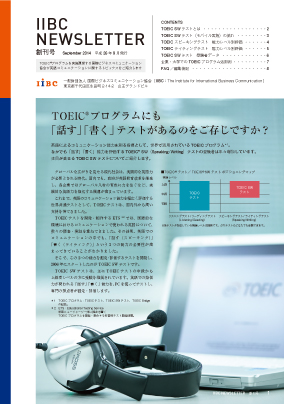
TOEIC Newsletter was launched.
The TOEIC LPI (Language Proficiency Interview)* aimed to provide a more rigorous and detailed evaluation of speaking ability, and eligibility was granted to those who had achieved a score of 730 or higher on the TOEIC Secure Program.
It was an interview test conducted in a one-on-one free conversation format with an interviewer. Each time, the test was held in Tokyo and Osaka approximately two months after the end of the Secure Program.
*The TOEIC LPI ended in 2010.
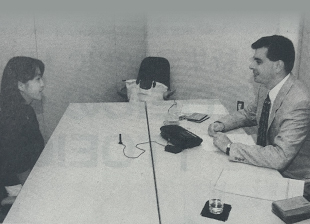
implementation
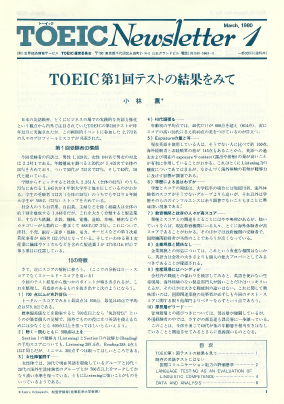
inaugural issue
Showa56
The TOEIC Institutional Program was launched.
In addition to the TOEIC Secure Program taken by individuals, the TOEIC Institutional Program was launched that allowed companies and organizations to arbitrarily decide on and conduct the test within their own organizations.
This allowed representatives of companies and organizations to accurately grasp the English proficiency of their employees, leading to an expansion of TOEIC Test implementation.
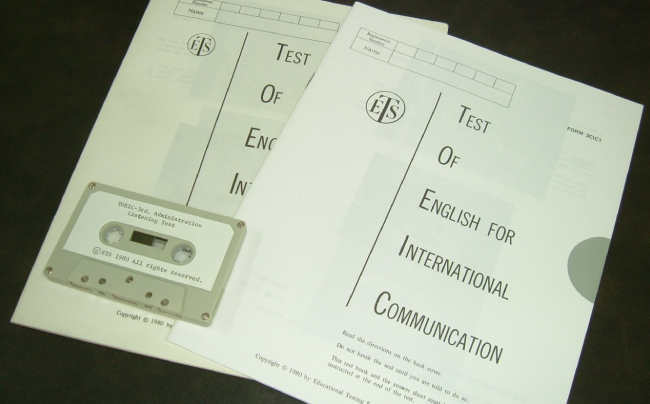
Showa61
The Institute for International Business Communication (IIBC) was established in Nagata Cho, Chiyoda-ku.
The TOEIC Secure Program achieved 100,000 test takers annually.
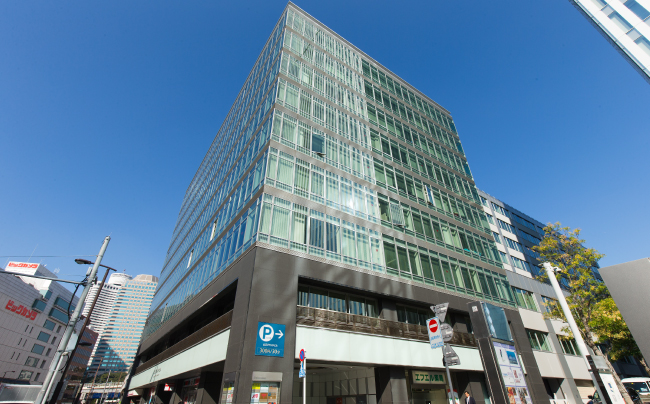
Showa62
The TOEIC Institutional Program achieved 100,000 test takers annually.
Heisei2
Total number of test takers for the TOEIC Test: 1.32 million
Heisei7
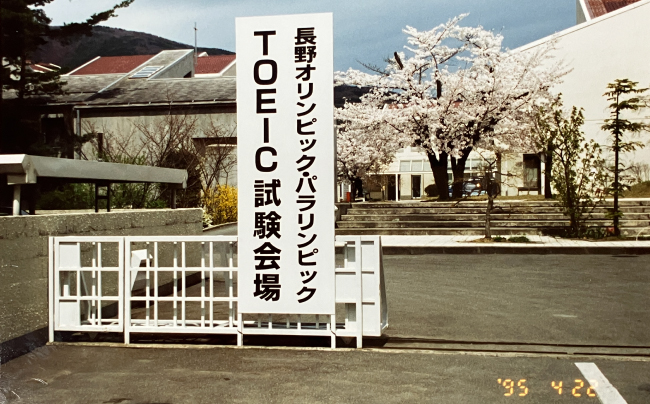
The TOEIC Test was adopted for language volunteers at the Nagano Olympics held in 1998.
Heisei12
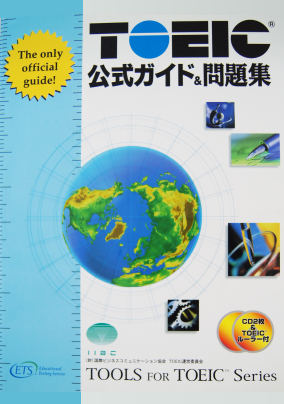
An official TOEIC Test practice book was released.
Total number of test takers for the TOEIC Test: 7.7 million
Heisei13
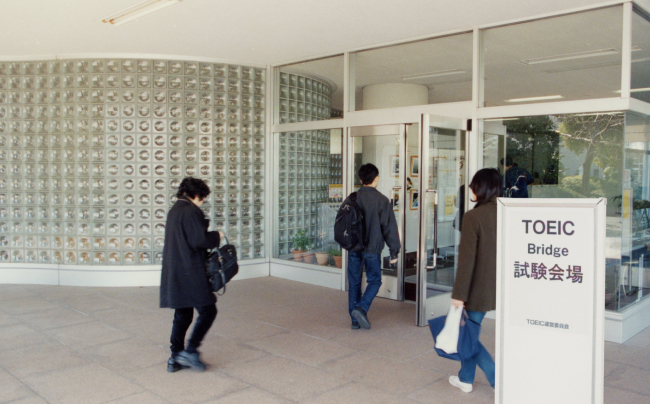
The TOEIC Bridge Secure Program was launched.
The number of test takers for the TOEIC Test increased year by year, reaching 1 million annually in 2000.
A key feature of the TOEIC Test was its ability to evaluate test takers with varying levels of communication proficiency using a single test.
However, because the TOEIC Test measures English proficiency from beginner to advanced levels on a scale of 10-990, it included questions that were difficult for beginner and intermediate English learners, making it a challenging test for many.
To address these issues, development of the TOEIC Bridge Tests began in May 1999 in collaboration with ETS, and a prototype was completed in January 2000.
Following interviews, surveys, and pilot testing, the TOEIC Bridge Tests were officially launched in November 2001.
The TOEIC Bridge Tests were positioned as a "bridge" to the TOEIC Test, enabling gradual English learning.
Heisei18
The TOEIC Test was revised.
Around 2004, 25 years after the first TOEIC Test, revisions to the TOEIC Test were underway to adapt to changes in the communication environment.
The increase in opportunities to use English in business settings, and the spread of the internet in the late 1990s, which led to the expansion of new communication methods, were factors behind the review.
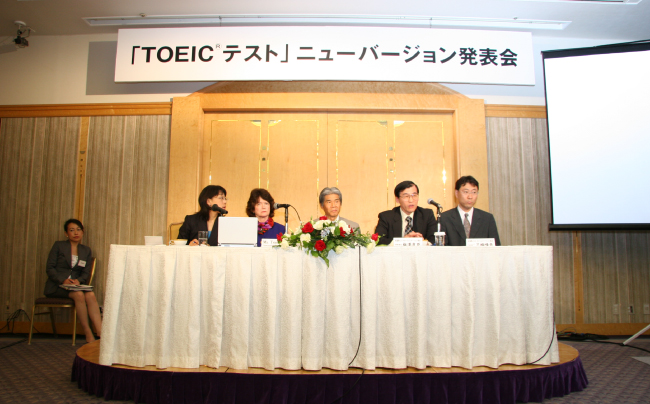
The development of a test that was in line with the times was sought, and a new test format (TOEIC Test New Version) was introduced starting with the May 2006 Secure Program.
Heisei19
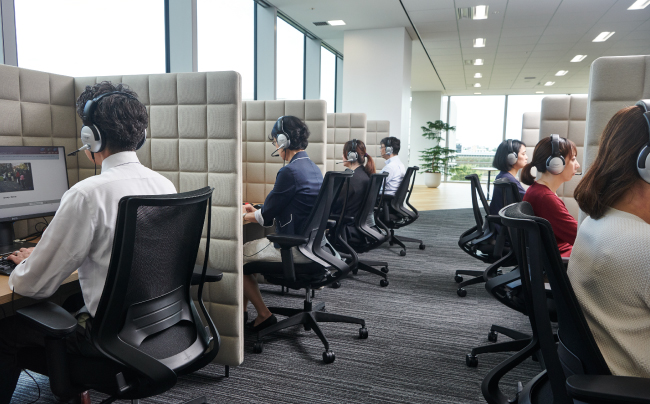
The TOEIC Speaking & Writing Secure Program was launched.
Heisei20
The TOEIC Speaking & Writing Institutional Program was launched.
Heisei21
The first TOEIC Essay Contest (currently the IIBC English Essay Contest for High School Students) was held.
Heisei22
The TOEIC LPI ended.
Total number of test takers for the TOEIC Program: 24.07 million
Heisei23
The first Global Human Resources Development Forum was held.
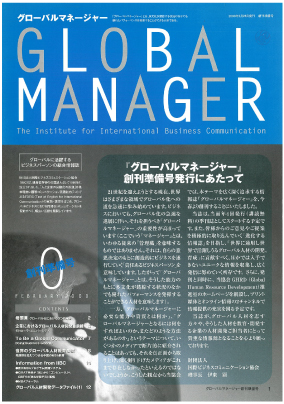
GLOBAL MANAGER was launched.
Heisei24
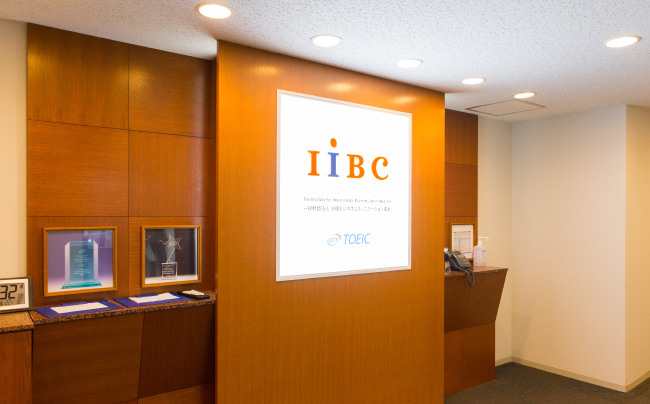
IIBC transitioned to General Incorporated Foundation, The Institute for International Business Communication.
The first Global Human Resources Development Conference was held.
Heisei26
IIBC NEWSLETTER was launched.
Heisei28
Partial updates were made to the TOEIC Test question format.
Updates were made to the TOEIC Program test names.
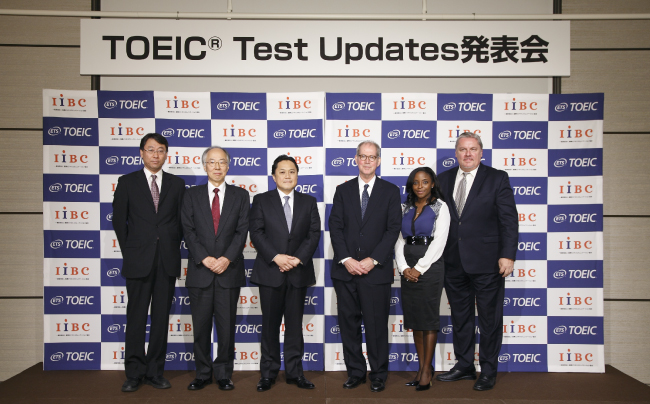
For the first time since the 2006 TOEIC Test New Version, the question format was revised in 2015.
At the "TOEIC Test Updates" presentation held in November 2015, the background of the changes to the question format and content was explained.
Actual communication situations, such as chat and instant messaging, which became popular around this time, were reflected in the questions of the updated test.
Heisei29
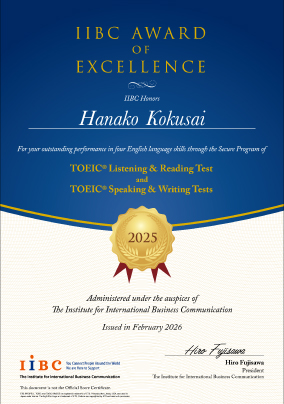
IIBC AWARD OF EXCELLENCE was established.
A system was launched to recognize individuals who achieved a TOEIC L&R score of 800 or higher (Listening 375 or higher, Reading 425 or higher) and a TOEIC S&W score (Speaking 160 or higher, Writing 170 or higher).
Heisei31
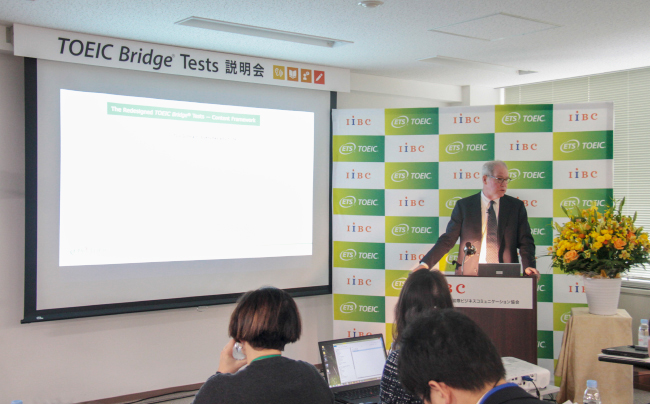
The TOEIC Bridge Tests were redesigned from 2-skill to 4-skill tests.
The TOEIC Listening & Reading Official e-Learning was released.
Reiwa2
Total number of test takers for the TOEIC Program: 49.04 million
Reiwa3
The TOEIC Listening & Reading Official e-Learning: Basic Edition was released.
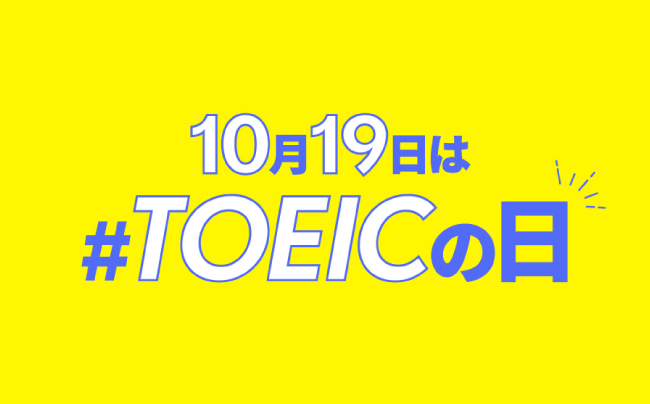
October 19 was designated as "TOEIC Day" by the Japan Anniversary Association.
Reiwa4
"TOEIC Official Content by IIBC" app was released.
Reiwa5
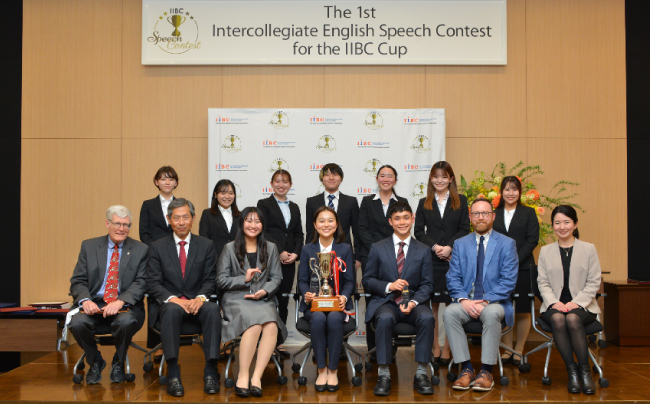
The first Intercollegiate English Speech Contest for the IIBC Cup was held.
Reiwa6
"TOEIC Official Study Materials" app was released.
Total number of test takers for the TOEIC Program: 57.99 million
Reiwa7
The IIBC office was relocated to Nakano Ward, Tokyo.
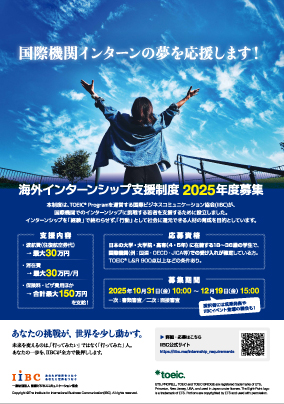
The IIBC Overseas Internship Support Program was launched.